
"Your journey to a healthier you begins upon opening this."
The Seasoning Process
Follow these essential steps to restore, protect, and maintain your cast iron’s natural non-stick barrier.
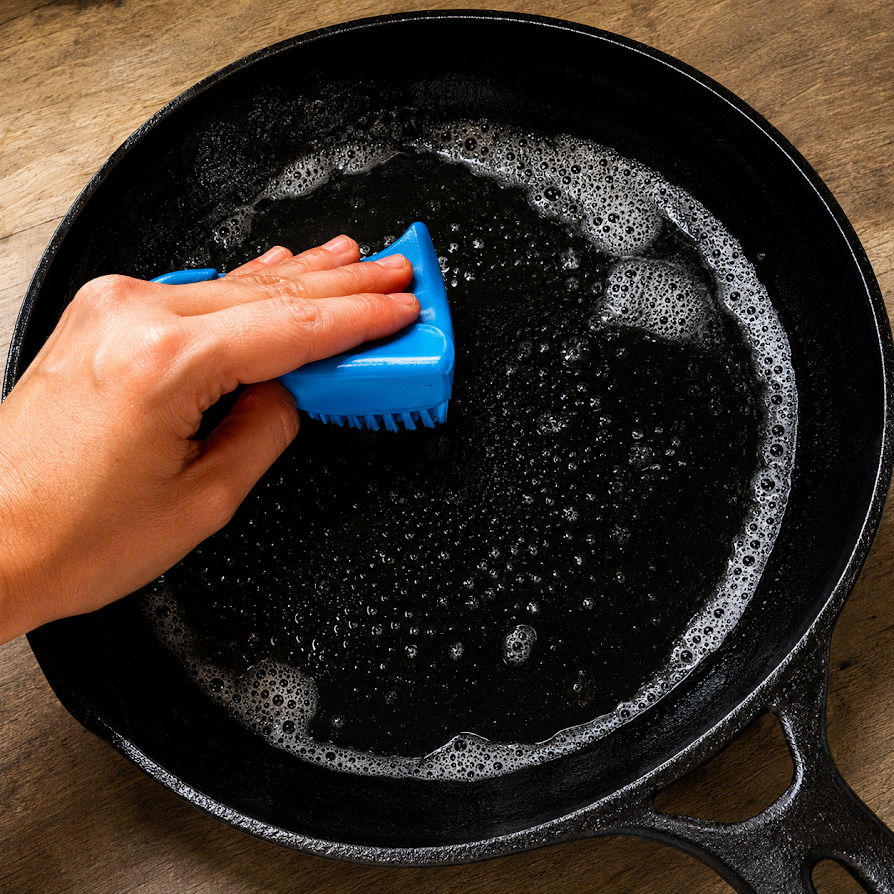
1 Soak, Scrub, Rinse
If your cast iron is especially rusty or crusty, give it a quick soak in mildly soapy, hot water. Use an abrasive scrubby pad or brush to remove any and all unwanted particles until the surface is smooth and free of unevenness or sticky gunk.
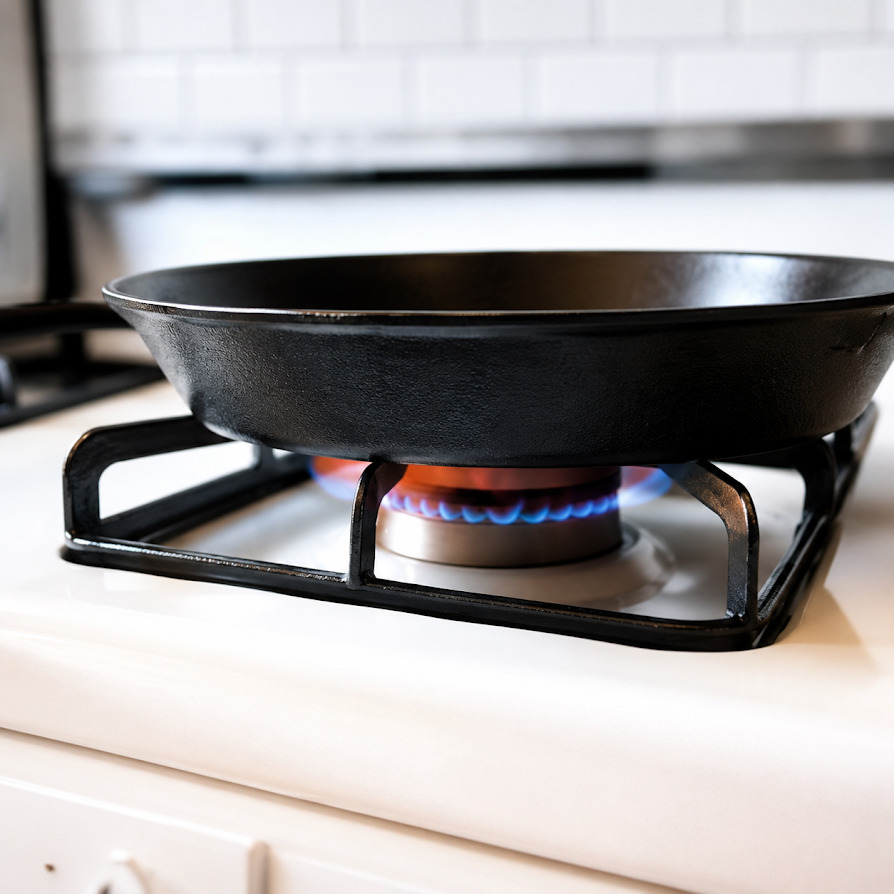
2 Dry (Completely!)
Wipe your cast iron down with a paper towel or dish linen, then set it on the stove over medium heat until all moisture has evaporated. This step is crucial! Cast iron is porous and traps moisture below the surface — heating it drives off all lingering water. Proceed with caution to avoid burning yourself!
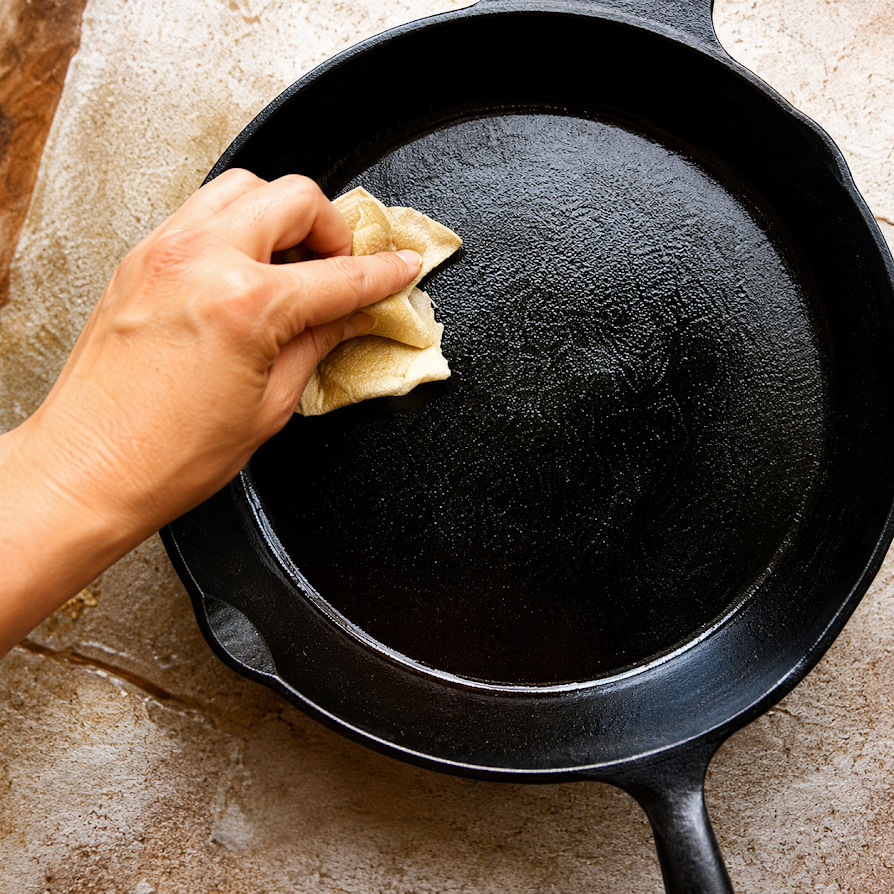
3 Oil and Buff
Drop 1 teaspoon of oil into the pan and rub it in evenly with a paper towel. Flip the pan, add oil if needed, and repeat until the entire pan (handle included!) is coated with the thinnest layer of oil. Keep buffing until it no longer looks greasy.
Note: Avoid using too much oil. A slick, wet pan will result in a sticky, grimy finish.
Proper Use & Routine Maintenance
- Fat & Oil: Use a sufficient amount of oil or fat when cooking to ensure proper browning and clean food releases.
- Gentle Cleansing: After cooking, avoid soap or abrasive scrubbies to preserve the seasoning. Use a soft sponge, a handful of kosher salt for stubborn residue, and hot water.
- Stovetop Drying: Wipe dry, then set the rinsed pan on the stove over medium heat to drive off remaining moisture and prevent rust.
- Touch-Up: If the pan looks dull, drop 1/2 teaspoon of oil in and rub it thoroughly across the pan with a paper towel while still hot.
Care & Maintenance Cheat Sheet
✓ Do's
- Wash the cookware by hand using a small amount of mild soap.
- Use a pan scraper or soft brush to remove stuck-on food.
- For stubborn residue, simmer water in the pan for 3–5 minutes, allow it to cool, then scrape gently.
- Dry the cookware immediately and thoroughly with a lint-free cloth or paper towel.
- Heat the pan lightly after washing to remove any remaining moisture.
- Apply a very thin layer of cooking oil after each use to help prevent rust.
- Wipe off excess oil so that no oily residue remains on the surface.
- Store the cookware in a dry place.
- Place paper towels between stacked pans to absorb moisture.
- Use low to medium heat for best cooking performance and longer life.
- Regular use will naturally improve seasoning and enhance the non-stick surface.
✗ Don'ts
- Do not leave the cookware wet or allow water to sit in the pan.
- Do not soak cast iron cookware in water for long periods.
- Do not use harsh detergents, steel wool, or abrasive scrubbers.
- Do not place cast iron cookware in the dishwasher.
- Do not cook highly acidic foods (vinegar or tomato-based dishes) during initial uses.
- Do not store food in the cookware for extended periods.
- Do not drag the cookware on glass or ceramic stovetops to avoid scratches.
- Do not heat an empty pan for long periods.
- Do not use the cookware in a microwave oven.
- Do not touch the hot handle without proper protection.